
Natural capital

SUSTAINABILITY FOCUS AREAS
As a group, we understand how important it is for our stakeholders that we conduct our business in an environmentally friendly and responsible way. Over the past few years, we have developed and implemented policies, practices and targets to reduce and limit our impact on the environment and continually encourage some of our stakeholders to do the same and to join us on our journey. We continue to actively analyse, manage and monitor these targets and practices throughout all our brands to ensure we operate as environmentally responsibly and as reasonably and feasibly possible.
While the group aims to monitor the use of resources, it has been difficult to compare our reduction performance with previous years as the Covid-19 pandemic has disrupted our average occupancy metrics. In 2021, our hotels were using negligible amounts of electricity and water as they were closed entirely. During the year under review, our usage has increased significantly as our occupancy rate increases, but it was only in the fourth quarter of FY22 that our occupancy rates have been comparable with pre-Covid levels.
Our sustainability metrics in respect of electricity and water usage are outlined below:
| Disclosure Topic | Key Performance Indicator | 2022 | 2021 |
| Total Energy Consumption | Total energy consumed (kWh) | 23.7 million | 17.7 million |
|---|---|---|---|
| – Percentage grid electricity | 91% | 89.6% | |
| – Percentage self-generated renewable energy | 8.9% | 10.4% | |
| – Percentage purchased renewable energy | – | – | |
| – Percentage energy from fuels | 1.1% | 0.4% | |
| Change in absolute energy consumed from previous year | 34%* | (25%) | |
| Change in energy consumed per occupied room from previous year | (33%) | 38% | |
| Renewable energy | Energy produced by solar/PV installations (kWh) | 2.1 million | 1.8 million |
| production | Excess solar energy produced that could be sold into national grids in the future (kWh) | 116 021 | 389 463 |
| Solar installations at X number of hotels | 25 | 25 | |
| Reduction in total amount of energy purchased from national energy providers | 8.9% | 8.2% | |
| Water Consumption | Total portfolio water consumption (kilolitres) | 410 942 | 312 112 |
| Percentage municipal water | 99 | 99 | |
| Percentage other water collection | Less than 1 | Less than 1 | |
| Average amount of water consumed per revenue (Kl/ARm) | 372.26 | 614.62 | |
| Total spend on water (ZAR) | 14 387 471 | 10 180 882 | |
| Change in water use from previous year (%) | 32 | (28) | |
| Change in water spend from previous year (%) | 41.32 | (26.3) |
* as our occupancy rates increase, our water and electricity usage will also increase
In the coming financial year, the group intends addressing the following sustainability issues, for which data is currently unavailable:
- the percentages of non-hazardous waste generated from hotel operations that are recycled, reused, or disposed of to landfill;
- the percentages of non-hazardous solid waste that are paper, plastic, glass, metal, organic, electronic, or a combination;
- the percentage of total plastic waste weight that is single-use;
- the number of sites and size of sites owned, leased, or managed in, or adjacent to, protected areas and areas of high biodiversity value
- total number of IUCN Red List species and national conservation list species with habitats in site areas
ENERGY CONSUMPTION
Our hotels and supporting infrastructure use electricity primarily generated by the national energy providers in the countries where we operate. As power outages are relatively common across Africa, all our hotels have backup diesel generators installed.
The bulk of the group's energy consumption results from water heating, air conditioning, lighting, and laundry operations. As these functions generate 80% to 90% of our carbon footprint, mitigating these effectively remains key.
Our total energy consumption for the period was 23.7 million kWh (2021: 17.7 million kWh). Sustainable energy management programmes at each hotel focus on operational and technical efficiencies. Our absolute energy consumption across all our hotels increased by 34% (2021: decreased by 25%) due to increase in open hotels and occupancies.
Electricity consumption (per occupied room and available room) and the resultant per room costs were as follows:
| kWh per occupied room |
Cost per occupied room (ZAR) |
kWh per available room |
Cost per available room (ZAR) |
|||||
| Brand | 2022 | 2021 | 2022 | 2021 | 2022 | 2021 | 2022 | 2021 |
| Courtyard Hotel | 55.5 | 79.0 | 123.36 | 152.91 | 16.5 | 9.6 | 36.66 | 17.33 |
|---|---|---|---|---|---|---|---|---|
| City Lodge Hotel | 23.6 | 31.5 | 43.83 | 58.63 | 9.4 | 6.8 | 17.82 | 12.59 |
| Town Lodge | 24.1 | 36.4 | 49.67 | 82.45 | 8.3 | 5.3 | 17.53 | 12.03 |
| Road Lodge | 16.3 | 20.2 | 37.27 | 45.03 | 6.9 | 5.2 | 15.73 | 11.46 |
RENEWABLE ENERGY
CLHG installed the first 4 250 panels at 25 of its hotels at a cost of R20 million when it launched its solar programme in 2019. These solar plants generate in excess of 2 million kWh (kilowatt hours) per year, nearly 10% of the group's total energy usage. The group is in the process of planning the next stage of its solar panel journey, which will include a further 10 to 15 hotels and will add another one million kWh/year to its generation capacity.
WATER CONSUMPTION
Reducing water consumption remains a joint effort between employees and guests. We encourage guests to help reduce water consumption without minimising their experience. Our newer and refurbished hotels reduced the number of rooms with baths to approximately 60% of the total complement. We also installed low-flow showerheads and taps and are evaluating other ways to reduce overall water consumption.
CLHG relies on municipal supplies for water, although some of our South African hotels use borehole water for property maintenance. We are looking into increasing the utilisation of borehole water. This involves the installation of filtration plants to ensure the water is fit for human consumption. The first plant is being trialled in Gqeberha (Port Elizabeth), and thereafter focus will shift to Gauteng. This adds to the group's operational sustainability rather than our direct environmental sustainability of reducing consumption, as it provides an alternative to traditional infrastructure and enhances business continuity especially as the steady supply of water is impacted by the aging water supply infrastructure in South Africa.
The total water consumption for the period was 410 942kℓ (2021: 312 112 kℓ), a 98 830kℓ, or 32%, increase year on year.
We are also responsible for managing water quality at our properties, achieved by using biodegradable chemicals and products, installing grease traps, and implementing saltwater chlorinators for swimming pools.
ANIMAL WELFARE
There has been much discussion around the subject of layer hens and the environment in which they are kept, specifically in respect of whether the layer hens are kept in cages. Eggs that are not cage-free are often cheaper and are more easily sourced, but the conditions in which the hens are kept are unacceptable to CLHG and to support the suppliers of non-cage-free eggs goes directly against the values of the group. Our guests demand food that is safe, healthy and grown sustainably. We acknowledge public concern and the wishes of our guests and are determined to ensure that our product supply chain is ethical and transparent.
In January 2020, the group publicly committed to only serving 100% cage-free eggs throughout its operations by 2025. We partnered with Humane Society International-Africa (HSI-Africa) on its journey towards offering eggs and egg products sourced in this way. CLHG Environmental currently serves approximately 1.4 million eggs annually of which 55% are cage-free.
Our sustainability committee has also recently raised proposals in respect of sourcing crate-free pork, which is sourced from sows that are not kept in gestation crates for the duration of their pregnancies. In the upcoming financial year, these proposals will be investigated and considered by the Exco.
COMPLIANCE
The group complies with the following South African legislation relevant to environmental sustainability:
- Atmospheric Pollution Prevention Act, 45 of 1965
- Environment Conservation Act, 73 of 1989
- National Environmental Management Act, 107 of 1998
- National Water Act, 36 of 1998
- Occupational Health and Safety Act, 85 of 1993
- Water Services Act, 108 of 1997
No environmental accidents occurred during the year, nor were any environmental-related fines imposed on the group.
The group currently does not have any biodiversity management plans in place.
OUR GOALS FOR THE YEAR AHEAD
Going forward, the group aims to continue reducing energy consumption where possible, on a per-room-sold basis. We are also continuing to introduce solutions that aim to reduce per-room-sold water consumption and are finding additional sources of water for hotels in regions where there is drought or unreliable municipal water supply. We are committed to finding more ways to reduce overall consumption of energy and water in our hotels. Solutions may include greywater re-use and water conservation in general, and consideration will be given to the issues brought to the board's attention by the sustainability committee.
The group intends implementing the following environmental sourcing checks in the upcoming financial year:
- Potential food suppliers are to be screened using environmental standards of food sourcing; and
- Suppliers are to be assessed in respect of their environmental impact, with actual and potential negative environmental impacts, if present, disqualifying that supplier from consideration by the group.
Up to and including 30 June 2022, no food suppliers have been subjected to these checks.
SUSTAINABILITY INITIATIVES
Earth Hour
Earth Hour is an initiative founded by the World Wide Fund for Nature (WWF) and encourages individuals, communities, corporates and households to turn off their lights for one hour from 20h30 to 21h30 each year on the last Saturday of March.
In line with its commitment to implement business practices in support of the attainment of the United Nations Sustainability Development Goals, CLHG pledged support to the fight against climate change and assisted in raising awareness by participating in Earth Hour in March 2022.
Hoteliers across the group found innovative ways to deliver hospitality by candlelight during this hour. From traditional candles and tea lights to lanterns and fairy lights, all off-grid illuminations helped create a festive atmosphere as staff invited guests for snacks and conversation in the hotels' restaurant.
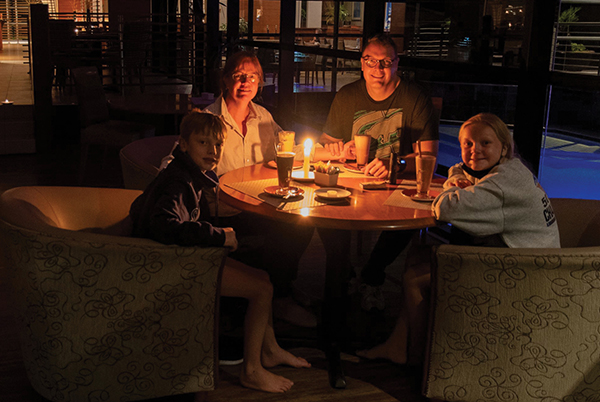
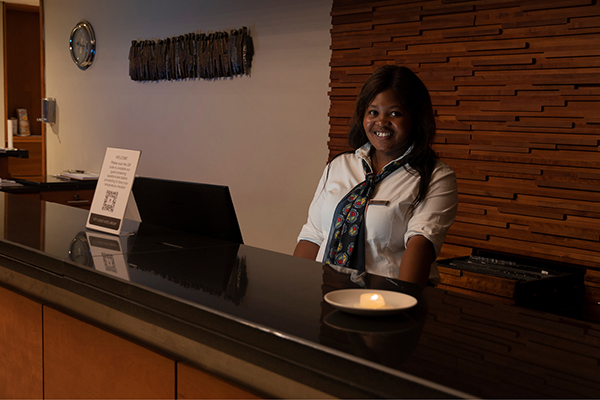
Celebrating Earth Hour 2022
